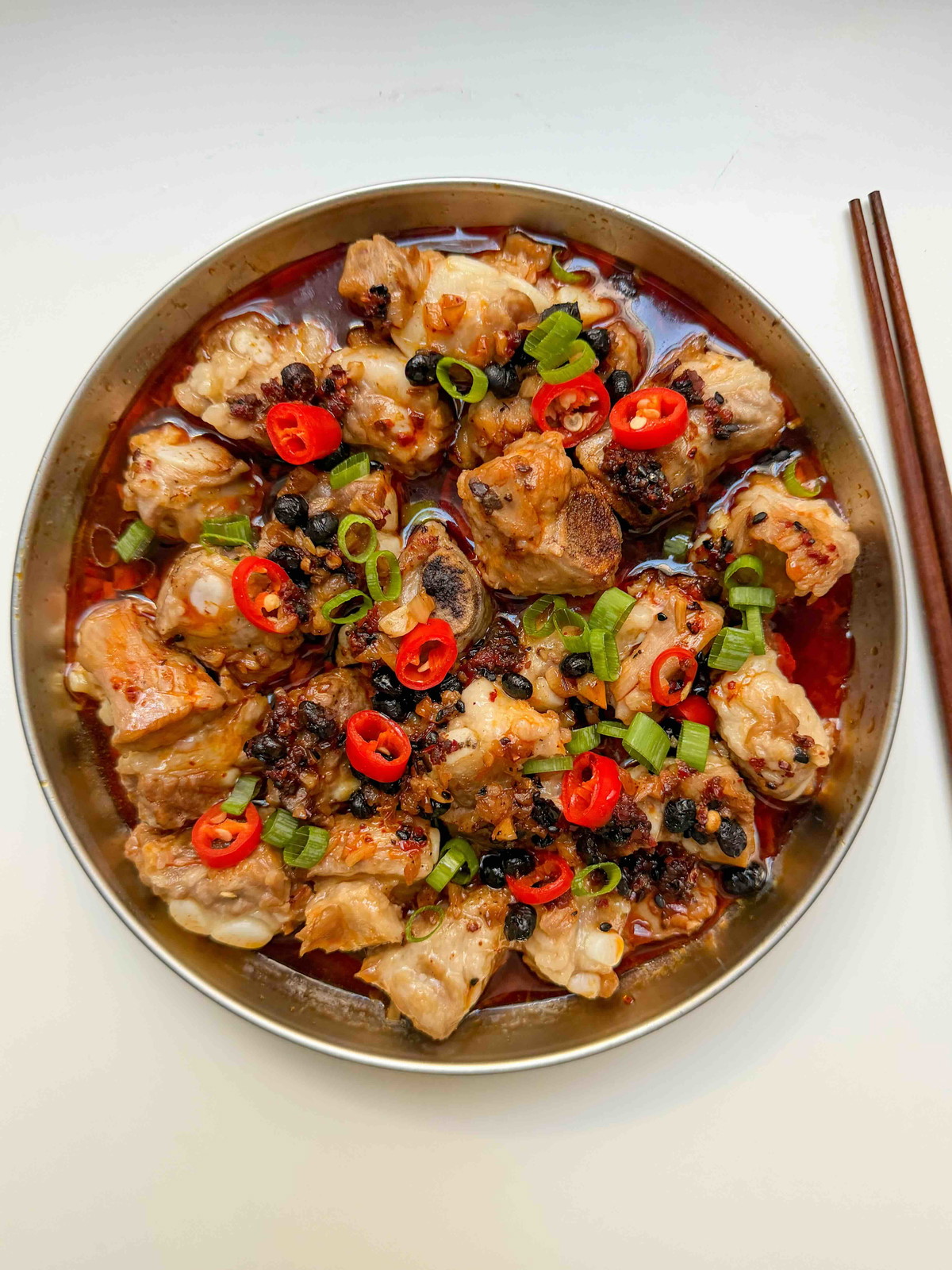
Chili Black Bean Steamed Pork Ribs
Xueci Cheng
30 minutes
Chinese
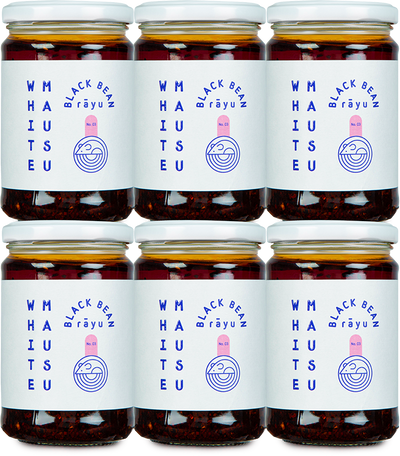
This version draws inspiration from a dish called douchilajiao zhengpaigu (豆豉辣椒蒸排骨) in Hunan cuisine, with heat from chili oil and fresh chiles balanced by the savoriness and umami of douchi and black bean rayu from White Mausu. You can also see it as a spicy version of the Cantonese dim sum steamed ribs.
Ingredients
blank
300 grams of pork niblets preferably with soft bones
- ½ teaspoon salt
- ½ teaspoon baking soda
1 tablespoon of cornstarch
blank
½ teaspoon sugar
- ½ teaspoon salt
1.4 teaspoon of white pepper
1 tablespoon of soya sauce
1 tablespoon shaoixing wine
2 thick slices of ginger
blank
4 garlic cloves minced
1 tablespoon douchi ( fermented black bean)
1 fresh red chilli thinly sliced ( like Thai Birds Eye or Spanish red chilli)
1-2 tablespoons black bean rayu
garnish with scallion green
Directions
- Choose riblets with mostly soft bones. Cut the ribs into 3-centimeter (about 1¼-inch) pieces. Place the ribs in a bowl and add the cornstarch. Rub thoroughly to coat, then rinse under cold running water several times, massaging the ribs, until the water runs clear. Transfer the ribs to a bowl of cold water with the baking soda and salt and let soak for 30 minutes to tenderize the meat. Drain well.
- Add the ribs to a clean bowl and season with the salt, sugar, white pepper, soy sauce, Shaoxing wine, and ginger. Massage the marinade into the meat until well absorbed so it seasons evenly. Let marinate for 30 minutes.
- While the ribs marinate, heat 1 tablespoon neutral oil in a small pan over medium heat. Add the garlic and douchi and cook, stirring, until fragrant and lightly golden, about 2 minutes. Remove from heat.
- Arrange the ribs in a single layer on a heatproof rimmed plate that will fit inside your steamer. Spoon the black bean rayu (including the solids) evenly over the ribs, followed by the fried garlic and douchi. Scatter the sliced red chili on top.
- Set up a steamer over a deep pot or wok with plenty of water and bring to a boil. Steam the ribs over high heat for 20 to 25 minutes, until the meat is tender and opaque throughout, checking occasionally to make sure the pot doesn’t run dry. Larger pieces may take up to 40 minutes. If the plate fills with excess liquid, carefully spoon some off before serving.
- Carefully remove the plate from the steamer and garnish with cilantro or scallions and serve hot, with steamed white rice and additional chili oil, if desired.